
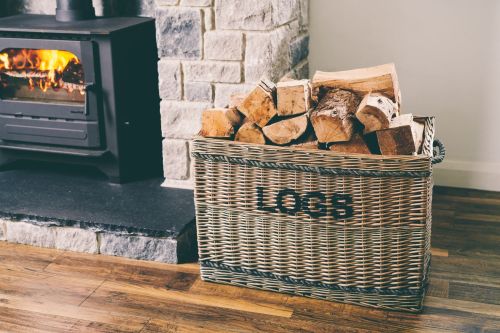
You light the stove.
The fire looks great.
Then an hour later, the glass is black again.
If you're constantly cleaning soot from your wood-burning stove, there's usually a reason for it — and simply cleaning the glass isn't going to solve the underlying problem.
So why does wood burner glass go black?
The most common causes are wet firewood, insufficient airflow, a fire burning too cool, incorrect log positioning or an issue with the stove or chimney draught.
And one of the first things worth checking is the firewood you're putting into it.
Quick Answer: Why Is My Stove Glass Turning Black?
If your wood burner glass keeps going black, check these first:
-
Is your firewood properly dry?
-
Are you closing the air controls too early?
-
Is the fire smouldering rather than burning with an active flame?
-
Are logs sitting against or very close to the glass?
-
Is the stove being overloaded?
-
Is the chimney drawing properly?
-
Does the stove or chimney need maintenance?
A little discolouration can occur during lighting or as the fire cools.
But if the glass becomes heavily blackened every time you light the stove, it's worth finding out why.
1. Wet Firewood Can Make Stove Glass Go Black
This should be one of the first things you check.
Wood contains water.
When you burn wet timber, some of the fire's energy has to be used to drive that moisture from the wood before the timber can burn effectively.
That can contribute to a cooler, smokier fire and greater deposits of soot and tar.
And some of those deposits can end up exactly where you don't want them:
on the glass.
The EPA advises against burning wet timber and warns that it can contribute to tar and soot build-up in a chimney.
What Moisture Content Should Firewood Be?
For domestic firewood, moisture content is one of the most useful things you can check when diagnosing poor burning.
Surefire Wood kiln-dried firewood is dried to below 20% moisture.
And our own independent laboratory testing in July 2026 recorded average moisture contents of:
-
8.16% — Force Dried Hardwood
-
10.06% — Force Dried Softwood
-
6.0% — Kindling
Individual logs naturally vary because timber is a natural material, but it demonstrates just how dry professionally kiln-dried firewood can be.
When you're buying firewood, remember:
You're buying wood — not water.
2. You're Closing the Air Controls Too Soon
Your stove needs oxygen.
When first lighting a fire, you normally need sufficient airflow to get the kindling and logs burning properly and establish the fire.
If you restrict the airflow too early, the fire can begin to smoulder.
More smouldering can mean more smoke.
More smoke can mean more deposits on your glass.
The exact way you should operate the air controls depends on your particular stove, so always follow the manufacturer's instructions rather than assuming every stove works the same way.
But as a general principle:
Don't rush to shut the fire down before it's properly established.
3. Your Fire Is Burning Too Cool
There's a temptation with a wood burner to load it with logs and then turn the air right down so everything burns as slowly as possible.
Slow must mean economical, right?
Not necessarily.
A fire starved of sufficient air can smoulder rather than burn effectively.
That can contribute to:
-
More smoke
-
Soot deposits
-
Black stove glass
-
Tar and creosote deposits
You're trying to maintain a properly burning fire — not keep a pile of logs smoking for as long as physically possible.
Follow the operating instructions for your stove and avoid prolonged low-temperature smouldering.
4. Your Logs Are Too Close to the Glass
Have a look at where the glass is going black.
If you're repeatedly getting dark patches around the bottom or a particular section of the window, log positioning could be contributing.
Logs pushed against or very close to the glass can interfere with airflow across the inside of the stove door.
It can also expose the glass directly to smoke and deposits from the burning timber.
Don't cram the firebox full.
Load your stove according to the manufacturer's instructions and keep the firewood appropriately positioned inside the firebox.
5. The Airwash Isn't Working Effectively
Many modern wood-burning stoves have an airwash system.
Despite the name, nobody is hiding inside your stove with a tiny bottle of glass cleaner.
It uses airflow.
Air is directed across the inside surface of the glass, helping to reduce the amount of soot and smoke that settles on it.
If the stove isn't getting the airflow it needs, that system may not work as effectively.
That's another reason why completely starving a stove of air can cause problems.
If you're using properly dry firewood and operating the stove according to its instructions but the glass still becomes heavily blackened, it may be worth having the stove checked professionally.
6. You're Putting Too Much Wood in the Stove
More logs don't automatically mean a better fire.
Overloading the firebox can restrict the space available for effective combustion and place logs too close to the glass.
Use an appropriate quantity of firewood for your particular stove.
If you want more heat, don't assume the answer is to fill every available centimetre of the firebox with timber.
Your stove manufacturer will normally specify appropriate fuel loads.
7. Your Chimney or Flue May Need Attention
Sometimes the problem isn't the firewood.
A stove relies on the chimney or flue to create the draught required to draw combustion gases away.
If something isn't working correctly, combustion can be affected.
Possible issues can include:
-
A chimney that needs sweeping
-
Restricted airflow
-
Poor draught
-
Problems with the stove
-
Problems with the flue or installation
If your stove has suddenly started behaving differently, repeatedly fills with smoke, sends smoke into the room or continues heavily blackening the glass despite using properly dry firewood and following the operating instructions, get it checked by a competent professional.
Don't try to diagnose a potentially serious chimney or flue problem by guesswork.
Does Black Stove Glass Mean My Firewood Is Wet?
Not necessarily.
Wet firewood is one possible cause, but black glass alone doesn't prove that your logs are wet.
You also need to consider:
-
Airflow
-
Fire temperature
-
Stove operation
-
Log positioning
-
Chimney draught
-
Stove maintenance
If you want to rule out the firewood, use a moisture meter.
How Do You Test Firewood With a Moisture Meter?
Don't simply press the meter against the outside of a log.
The outside surface may be considerably drier than the centre.
For a more useful reading:
-
Take a representative log.
-
Split it open.
-
Test the freshly exposed internal face.
-
Take more than one reading if possible.
That gives you a much better indication of what's happening inside the timber.
If you're repeatedly experiencing black stove glass, checking your logs is a very sensible place to start.
Does Hardwood Stop Stove Glass Going Black?
No.
This is another reason the idea that “hardwood is always better” can be misleading.
Wet hardwood is still wet wood.
A properly kiln-dried Larch or Spruce log can be a far better fuel than a damp hardwood log.
Moisture content, airflow and how the stove is operated matter enormously.
Surefire Wood's standard Premium Firewood predominantly contains Larch and Spruce, while our Premium Hardwood predominantly contains Ash, Oak and Beech.
Both can make excellent firewood when properly dried.
The main difference is density and the type of fire you want.
Larch & Spruce: strong, responsive heat.
Ash, Oak & Beech: denser hardwoods suited to a steadier, more sustained fire once established.
Why Does My Stove Glass Go Black Overnight?
If you're loading the stove and then severely restricting the airflow to try to make the fire last overnight, that may be part of the problem.
A heavily restricted fire can smoulder.
And smouldering combustion can create considerably more deposits than an active fire.
Don't assume that keeping a log glowing for as many hours as possible is the most effective way to use your stove.
Operate it according to the manufacturer's instructions.
Why Does My Stove Glass Go Black at the Bottom?
If the blackening is concentrated around the bottom or corners of the glass, look at:
-
Where the logs are positioned
-
Whether the firebox is overloaded
-
Whether airflow is being restricted
-
Whether the stove is reaching an appropriate operating temperature
A log sitting close to the glass can create a very obvious localised black patch.
Move the fuel further back within the permitted loading area and see whether the pattern changes.
Why Does My Stove Glass Go Black So Quickly?
If clean glass becomes heavily black within a short period after lighting, start with the basics.
Check the logs
Are they genuinely dry?
Check the fire
Is it burning actively or smouldering?
Check the air
Have you restricted the controls too soon?
Check the loading
Are logs pushed against the glass?
Check the stove
Are you following the manufacturer's instructions?
Check the chimney
If the problem persists despite dry fuel and correct operation, arrange professional advice.
Work through those before reaching for the glass cleaner again.
How Do I Stop My Wood Burner Glass Going Black?
There isn't one magic trick.
Good stove operation is about getting several things right at the same time.
For clearer stove glass:
-
Use properly dry firewood
-
Build the fire with dry kindling
-
Allow the fire to establish properly
-
Follow your stove manufacturer's air-control instructions
-
Avoid prolonged smouldering
-
Don't overload the stove
-
Keep logs away from the glass
-
Store kiln-dried firewood somewhere dry
-
Have your chimney swept at appropriate intervals
-
Have persistent stove or draught problems professionally investigated
If you get the fuel + airflow + temperature + maintenance right, you're addressing the things that actually cause the problem.
How Should I Clean Black Wood Burner Glass?
First:
let the stove cool completely.
Then follow the cleaning instructions provided by your stove manufacturer.
Different stove manufacturers may recommend different cleaning products and methods, so don't assume that every household cleaner is suitable for heat-resistant stove glass, seals or surrounding finishes.
And remember:
Cleaning the glass only removes the symptom.
If it's completely black again after the next fire, you still need to find the cause.
Can Kiln-Dried Firewood Help Keep Stove Glass Cleaner?
Properly kiln-dried firewood removes one major variable from the equation: excess moisture.
It doesn't guarantee perfectly clean stove glass.
You can still create soot with dry firewood if you operate the stove incorrectly, restrict airflow excessively or have a chimney or appliance problem.
But starting with genuinely dry firewood gives your stove a much better chance of burning as intended.
That's why Surefire Wood kiln dries its firewood professionally rather than relying on vague descriptions such as “dry” or “seasoned”.
We produce and kiln dry our own firewood at our family business in Co. Fermanagh.
The timber is processed, kiln dried and triple screened before it reaches our customers.
We've been producing firewood since 1989.
Frequently Asked Questions
Why does my wood burner glass keep going black?
Common causes include wet firewood, insufficient airflow, a cool or smouldering fire, logs positioned too close to the glass, overloading, poor chimney draught or maintenance issues.
Will wet logs make stove glass black?
They can. Excess moisture can contribute to cooler, smokier combustion and increased soot and tar deposits.
Is black glass on a wood burner normal?
A little temporary discolouration can occur, particularly during lighting or cooling. Persistent heavy blackening every time you use the stove is worth investigating.
Can softwood make stove glass black?
Properly kiln-dried softwood can make excellent firewood. Moisture content and combustion conditions are more important than simply whether the timber is classified as hardwood or softwood.
Should I leave the stove vents open?
Follow the manufacturer's instructions for your specific appliance. A stove needs sufficient combustion air, particularly while establishing the fire, but the correct control settings vary between appliances.
Why is my stove glass black even with kiln-dried logs?
If you know the firewood is properly dry, investigate airflow, operating temperature, log positioning, chimney draught and stove maintenance.
Buy Kiln-Dried Firewood in Ireland
If black stove glass has you questioning the logs you're burning, start with something you can actually measure:
moisture content.
Surefire Wood produces kiln-dried firewood in Co. Fermanagh for delivery to homes throughout Ireland.
Our Premium Firewood predominantly contains Larch & Spruce, while our Premium Hardwood predominantly contains Ash, Oak & Beech.
Professionally kiln dried.
Below 20% moisture.
Triple screened.
Produced by us.
Because when you're trying to get the best from your stove, the quality of what you put into it matters.
Surefire Wood — Armstrong family firewood producers since 1989.