
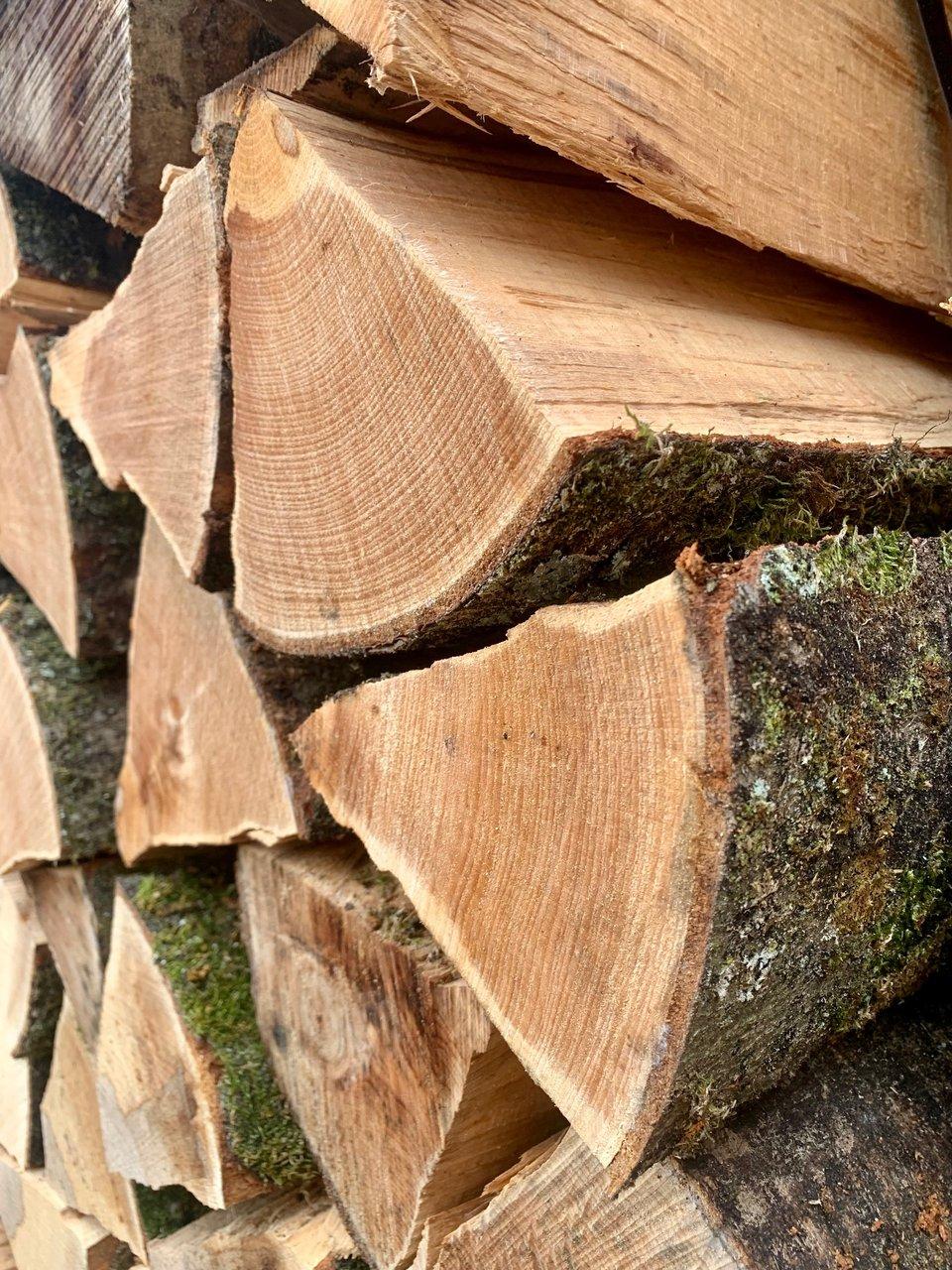
Is It Illegal to Sell Wet Logs in Ireland? Firewood Moisture Rules Explained
If you own a wood-burning stove, open fire or multi-fuel stove, you may have seen one particular question appearing on Google:
“Is it illegal to sell wet logs in Ireland?”
The answer is more complicated than simply saying yes or no.
The Republic of Ireland has nationwide regulations governing solid fuels, including firewood. These rules set maximum moisture levels for wood products and logs sold in smaller quantities.
And importantly, the legal moisture limit is changing in September 2026.
Until 31 August 2026, relevant wood products and wood logs supplied in units of 2 cubic metres or less must have a moisture content of less than 25%.
From 1 September 2026, that limit tightens to less than 20% moisture.
For anyone buying firewood, however, there's another important point:
Legal doesn't necessarily mean optimal.
Properly kiln dried firewood with a low moisture content will generally light more easily, burn more efficiently and produce less smoke than wet timber.
At Surefire Wood, we produce kiln dried firewood in Northern Ireland using locally sourced, FSC®-certified timber and supply customers throughout the Republic of Ireland.
Here's what you need to know.
Is It Illegal to Sell Wet Logs in Ireland?
Ireland's Air Pollution Act 1987 (Solid Fuels) Regulations 2022 introduced nationwide standards for solid fuels, including firewood.
For 100% biomass fuel products, including wood products and wood logs supplied in units of 2 cubic metres or less, the regulations established a maximum permitted moisture content.
The original standard was:
Less than 25% moisture.
The regulations were designed to subsequently tighten that requirement to:
Less than 20% moisture.
Following an amendment in 2025, the introduction of the stricter 20% requirement was postponed until 1 September 2026.
Therefore, the position is:
Until 31 August 2026: less than 25% moisture.
From 1 September 2026: less than 20% moisture.
That's the distinction customers and firewood sellers in Ireland need to understand.
Why Is the Moisture Limit Changing to 20%?
The purpose of the Solid Fuel Regulations is ultimately about improving air quality.
Wet wood doesn't combust as efficiently as properly dried timber.
When a log contains a large amount of water, energy from the fire has to be used to evaporate that moisture before the timber can burn effectively.
That can mean:
- More smoke
- Poorer combustion
- Less useful heat
- Increased particulate emissions
- Greater potential for deposits in stoves and chimneys
Reducing the permitted moisture content to below 20% is therefore intended to improve the standard of firewood being supplied for domestic burning.
The Irish Government's current guidance confirms that the limit for relevant 100% biomass products moves from below 25% to below 20% on 1 September 2026.
What Exactly Does the Irish Firewood Rule Cover?
The regulations cover 100% biomass fuel products, including wood products and wood logs.
For wood supplied in units of 2 cubic metres or less, the moisture-content requirement applies.
That includes the sort of firewood quantities commonly purchased by households.
However, there is an important distinction when buying larger quantities.
What About Firewood Sold in Loads Over 2 Cubic Metres?
The rules treat larger-volume firewood differently.
Wood logs supplied in units of more than 2 cubic metres are not subject to the same maximum moisture requirement at the point of sale.
Instead, these larger loads must be accompanied by a notice telling the purchaser that the wood is not suitable for burning until it has been sufficiently dried.
From 1 September 2026, the prescribed notice reflects the new 20% moisture threshold.
This distinction is important because it means that saying:
“It is illegal to sell any wet wood in Ireland.”
would be inaccurate.
The regulations distinguish between smaller quantities intended for more immediate use and larger-volume supplies that may require further drying.
What Does Less Than 20% Moisture Actually Mean?
Moisture content tells you how much water remains in the timber.
The lower the moisture content, the less energy your fire needs to waste evaporating water before the wood can burn effectively.
That's why the move to less than 20% moisture is significant.
Think of it another way:
You buy firewood for the wood, not the water.
A heavy bag of wet logs might look like good value.
But if a significant proportion of that weight is moisture, you've effectively paid for water that your fire then has to remove.
Properly dried firewood gives you much more useful fuel.
Wet Logs vs Kiln Dried Logs
This is where the legal requirement and the customer's experience come together.
Wet logs can be:
Harder to light, slower to establish, smokier and less efficient.
They may hiss or steam when placed on a fire and can contribute to blackened stove glass and increased deposits.
Properly kiln dried logs:
Light more readily, establish a good fire more quickly and provide efficient, dependable heat without the fire having to deal with excessive moisture first.
For regular stove users, that difference is noticeable.
Is Seasoned Firewood the Same as Kiln Dried Firewood?
No.
These terms describe different drying methods.
Seasoned firewood has normally been allowed to dry naturally over time.
Kiln dried firewood has been dried using a controlled kiln process.
Good seasoned firewood can reach a suitably low moisture content if it has been dried and stored correctly.
But simply describing a log as “seasoned” doesn't tell you its actual moisture content.
The more useful question is:
How dry is it?
A moisture percentage tells you considerably more than a marketing description.
How Can I Check the Moisture Content of Firewood?
A simple wood moisture meter is one of the best tools for checking your logs at home.
But there's a right and wrong way to use one.
Don't just stick the meter into the outside of a log.
The surface may be considerably drier than the centre.
Instead:
Split a log and take your reading from the freshly exposed internal face.
That gives you a much better indication of the moisture contained within the timber.
There are also some traditional clues.
Dry logs may:
- Feel lighter
- Have cracks around the ends
- Have looser bark
- Make a more hollow sound when knocked together
Wet logs can feel unusually heavy and may hiss, steam or struggle to establish when placed on a fire.
But don't guess if you don't have to.
Measure it.
What Are the Rules for Firewood Producers in Ireland?
The regulations don't just establish standards for the product.
Businesses producing, treating or importing solid fuel for retail or distribution in Ireland are also subject to registration requirements.
The Environmental Protection Agency (EPA) maintains Ireland's Fuels Register.
A solid-fuel producer must register annually with the EPA and satisfy the applicable certification and compliance requirements. The EPA is currently processing registrations for the 2026–2027 heating season.
This creates greater accountability within the Irish solid-fuel market and helps ensure that products being supplied meet the applicable standards.
Why Does Dry Firewood Matter So Much in Ireland?
Ireland has a long tradition of using solid fuels for home heating.
But the way we heat our homes has a direct effect on local air quality.
Poor combustion produces more smoke and fine particles.
And wet firewood makes good combustion considerably harder to achieve.
Properly dried logs allow the fire to reach an effective operating temperature faster and burn the timber more efficiently.
That benefits both the person sitting beside the stove and the air outside the chimney.
Is It Illegal to Burn Wet Logs in Ireland?
This needs to be separated from the rules governing their sale.
The Solid Fuel Regulations regulate the production, marketing, sale and distribution of solid fuels and establish standards those fuels must meet.
That doesn't mean every piece of timber containing more than the prescribed moisture percentage automatically becomes illegal for a householder to possess.
The important distinction is between the standards applying when regulated firewood is sold and the wider question of what an individual burns.
But from a practical point of view, intentionally burning wet logs is a poor idea regardless.
You'll normally get:
More smoke.
Less useful heat.
More difficulty establishing the fire.
Poorer combustion.
If you're going to the trouble and expense of heating your home with firewood, start with properly dried fuel.
Why Surefire Wood Kiln Dries Its Firewood
At Surefire Wood, we don't believe customers should have to buy firewood and then finish preparing it themselves.
We produce and kiln dry our firewood in Northern Ireland, using locally sourced, FSC®-certified timber.
That gives us control over the process from timber through to finished firewood.
Our two main firewood ranges also give customers a genuine choice depending on how they use their stove or fire.
Kiln Dried Hardwood Logs
Our premium kiln dried hardwood includes quality species such as:
Ash, Oak and Beech.
These dense hardwood species provide excellent heat output and a long-lasting burn, making them a superb choice for regular users of wood-burning stoves and open fires.
They're particularly suited to customers who value a sustained, dependable fire.
Kiln Dried Spruce & Larch Firewood
Hardwood isn't the only good firewood.
Our kiln dried Spruce & Larch range provides an excellent alternative.
Spruce and Larch are quick to light and produce strong, responsive heat, with burn times comparable to popular firewood species such as Birch and Alder.
That makes our Spruce & Larch range an excellent combination of performance and value.
Both ranges are professionally kiln dried and available for delivery throughout Ireland.
Buying Kiln Dried Logs Online in Ireland
When you're comparing firewood suppliers online, don't simply look at the price.
Look at what you're actually getting.
Ask:
What species are the logs?
What is their moisture content?
Where did the timber come from?
Has it been properly kiln dried?
How much firewood am I actually receiving?
Who produced it?
Is the supplier complying with Irish solid-fuel requirements?
These questions matter.
A cheap load of wet timber isn't necessarily cheap fuel.
If you're paying for unnecessary water and then getting less useful heat from your fire, that apparent saving can disappear very quickly.
How Should You Store Kiln Dried Logs?
Buying dry firewood is only half the job.
You then need to keep it dry.
Store your logs:
- Off the ground
- Protected from rain
- Under cover
- Somewhere with good airflow
- Away from persistent damp
A proper log store with ventilation is ideal.
Avoid simply covering wet timber tightly with plastic and expecting it to dry. Air needs to circulate around the logs so moisture can escape.
And don't leave properly kiln dried firewood exposed to driving rain.
You've paid for dry fuel.
Keep it that way.
Can Wet Logs Damage a Stove or Chimney?
Wet logs don't necessarily destroy a stove simply because you burn one, but repeatedly burning high-moisture wood can create problems.
Poor combustion can result in more smoke and deposits.
It can contribute to:
Blackened stove glass.
Tar and creosote deposits.
Dirtier flue systems.
Poor stove performance.
Reduced useful heat.
Properly dried firewood combined with correct stove operation and regular chimney maintenance is a much better approach.
Is Kiln Dried Firewood Worth Paying More For?
Look at the fuel rather than simply the purchase price.
Suppose two loads of firewood appear similar.
One has been professionally kiln dried.
The other contains considerably more moisture.
The wetter load may actually feel heavier.
That doesn't make it better value.
Some of that extra weight is water.
And when you put those logs onto your fire, you then have to use energy to remove that water.
With properly dried logs, more of the energy released can contribute towards producing useful heat.
That's what you're actually buying firewood for.
Ireland's Firewood Moisture Limit Is Changing
This is the part customers need to remember.
Up to 31 August 2026
Relevant 100% biomass products, including wood products and wood logs supplied in units of 2m³ or less, must have a moisture content of:
Less than 25%.
From 1 September 2026
The maximum becomes:
Less than 20%.
The Irish Government confirmed the postponement of the tighter standard until September 2026, and the 2025 statutory amendment formally changed the commencement date.
That is the current legal position.
Frequently Asked Questions
Is it illegal to sell wet logs in Ireland?
There are legal moisture limits for regulated firewood sales. For relevant wood products and logs supplied in quantities of 2m³ or less, the limit is currently less than 25%, changing to less than 20% from 1 September 2026.
Is the firewood moisture limit 20% or 25% in Ireland?
Both figures are correct depending on the date.
The limit remains below 25% until 31 August 2026. It falls to below 20% from 1 September 2026.
What happens with firewood sold in quantities over 2m³?
Wood supplied in larger quantities is treated differently. The regulations require larger loads to carry prescribed information explaining that the wood needs to be sufficiently dried before burning.
Are kiln dried logs better than wet logs?
For immediate use, properly dried logs are a much better fuel. They are easier to light and burn more efficiently because less energy is being wasted evaporating water.
Does kiln dried mean hardwood?
No.
Kiln dried describes how the timber has been dried.
Both hardwood and softwood can make excellent kiln dried firewood when correctly processed.
What hardwood species does Surefire Wood supply?
Our kiln dried hardwood range includes species such as Ash, Oak and Beech.
What other kiln dried firewood does Surefire Wood offer?
We also produce Spruce & Larch kiln dried firewood, providing quick lighting, strong heat and excellent value.
So, Is It Illegal to Sell Wet Logs in Ireland?
The accurate answer is:
Ireland regulates the moisture content of firewood sold in smaller quantities, but the legal limit is currently going through a transition.
For relevant 100% biomass wood products and logs supplied in units of 2 cubic metres or less, the moisture content must currently be less than 25%.
From 1 September 2026, that tightens to less than 20%.
Larger-volume supplies are treated differently, so the blanket statement “it's illegal to sell any wet wood in Ireland” isn't accurate.
For customers, though, there's a much simpler rule:
Buy your firewood properly dried.
You're buying logs to produce heat, not paying for unnecessary water.
Surefire Wood produces premium kiln dried Ash, Oak & Beech hardwood and Spruce & Larch firewood using locally sourced, FSC®-certified timber, with convenient delivery throughout the Republic of Ireland.