
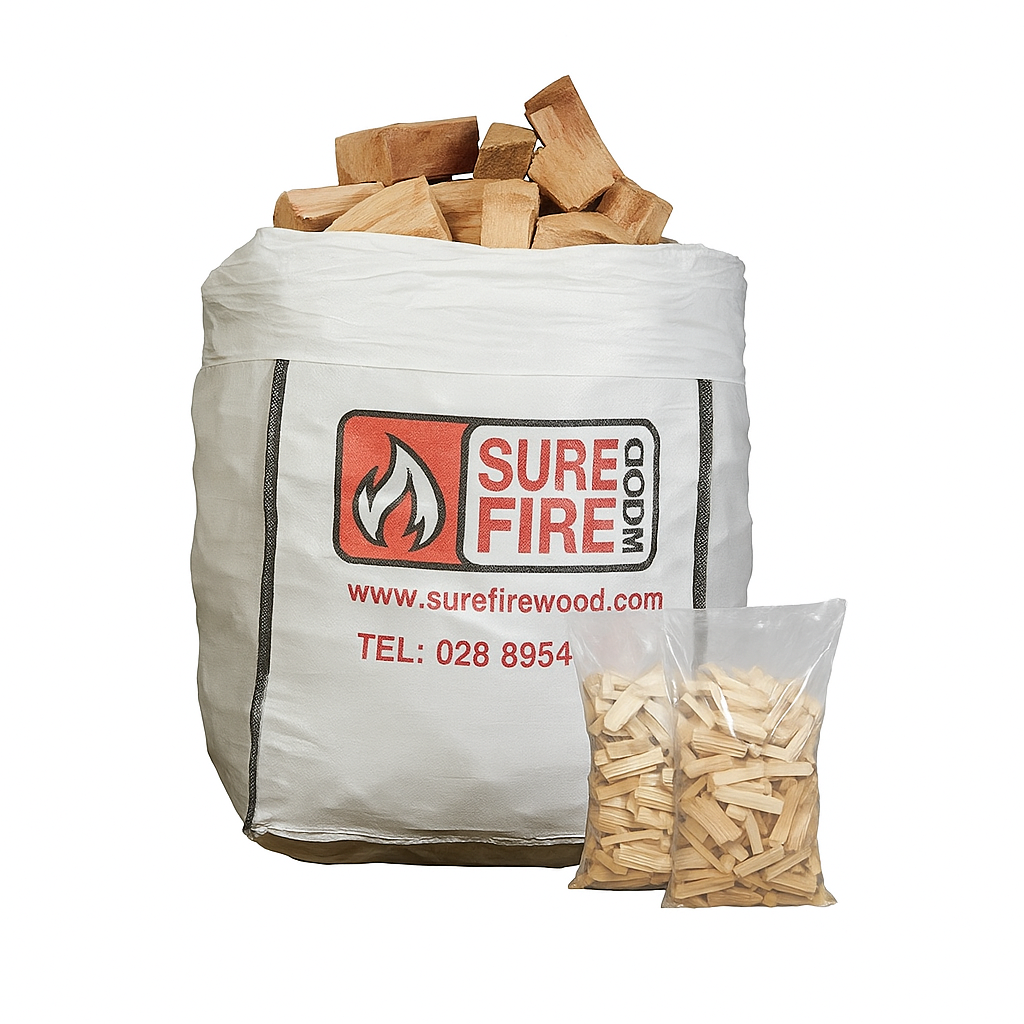
Kiln Dried vs Seasoned Firewood: Which Is Better?
Kiln Dried vs Seasoned Firewood: Which Is Better?
If you're buying firewood for a wood-burning stove, open fire or multi-fuel stove, one of the first questions you'll encounter is whether to choose kiln dried or seasoned firewood.
Both have their place, but they are not the same.
Moisture content, consistency, heat output and storage all influence how well your firewood performs. Understanding these differences can help you burn more efficiently, reduce chimney maintenance and get better value from every load of logs.
At Surefire Wood, we've spent decades producing premium kiln dried firewood for homeowners, businesses and commercial customers across Ireland and the United Kingdom. As Ireland's leading producer and one of Europe's largest producers of kiln dried firewood, we've processed thousands of tonnes of timber and understand exactly how moisture affects firewood performance.
In this guide, we'll explain the differences between kiln dried and seasoned firewood, the advantages and disadvantages of each, and how to choose the right option for your home.
Quick Answer
If you're looking for the simple answer, here it is.
For most homeowners, premium kiln dried firewood is the better choice.
When properly produced, kiln dried firewood offers:
- Lower moisture content
- Easier lighting
- Higher heat output
- Cleaner burning
- Less smoke
- Better stove efficiency
- More consistent quality
In Ireland, look for WFQA Ready to Burn certified firewood. In the United Kingdom, look for Woodsure Ready to Burn certification. Both schemes verify that the firewood contains less than 20% moisture and is ready to burn immediately.
What Is Kiln Dried Firewood?
Kiln dried firewood is timber that has been dried in a controlled kiln using carefully managed heat and airflow.
Unlike natural seasoning, kiln drying allows producers to reduce moisture content consistently throughout the logs, producing firewood that's ready to use as soon as it's delivered.
Premium kiln dried firewood should have a moisture content below 20%, meeting recognised Ready to Burn standards.
At Surefire Wood, our kiln drying process is designed to produce consistent, high-quality firewood that lights easily, burns efficiently and delivers reliable performance throughout the heating season.
What Is Seasoned Firewood?
Seasoned firewood is timber that has been left to dry naturally over an extended period, often between 12 and 24 months depending on the species, weather conditions and storage methods.
When seasoned correctly, it can provide good results.
However, because the process relies on natural drying, moisture content can vary considerably between logs.
Some may be ready to burn.
Others may still contain excessive moisture.
This variation often leads to inconsistent performance.
Moisture Content – The Biggest Difference
The single biggest difference between kiln dried and seasoned firewood is moisture.
Freshly cut timber can contain more than 50% moisture.
Before it burns efficiently, that water must first be evaporated.
The more moisture contained within the log:
- The harder it is to light
- The less heat it produces
- The more smoke it creates
- The greater the build-up of soot and creosote
This is why properly dried firewood performs so much better.
Why Moisture Matters
When you burn wet logs, a significant amount of the fire's energy is used simply to boil water from the timber.
That energy never heats your home.
Instead, it disappears as steam.
Properly kiln dried firewood allows almost all of the available energy within the timber to be converted into useful heat.
The result is:
- Higher efficiency
- Greater heat output
- Cleaner combustion
- Reduced emissions
- Less chimney maintenance
Kiln Dried vs Seasoned Firewood Comparison
| Feature | Kiln Dried | Seasoned |
|---|---|---|
| Moisture Content | Below 20% | Can vary significantly |
| Ready to Burn | Yes | Depends on storage |
| Heat Output | Excellent | Variable |
| Ease of Lighting | Excellent | Variable |
| Smoke | Low | Can be higher |
| Stove Efficiency | High | Variable |
| Consistency | Excellent | Variable |
| Storage Before Use | Minimal | May require further drying |
Is Seasoned Firewood Bad?
Not at all.
Properly seasoned firewood can burn well.
The challenge is consistency.
Because it dries naturally, performance depends on:
- Weather
- Storage
- Airflow
- Drying time
- Species
Customers often have no reliable way of knowing the moisture content before they burn it.
That's why certification matters.
The Importance of Ready to Burn Certification
Whether you're buying firewood in Ireland or the UK, independent certification provides confidence that the logs meet recognised moisture standards.
Look for:
- WFQA Ready to Burn in Ireland
- Woodsure Ready to Burn in the United Kingdom
These schemes verify that the firewood contains less than 20% moisture, helping ensure cleaner, more efficient burning.
Which Firewood Produces More Heat?
Many people assume seasoned firewood and kiln dried firewood produce the same heat because they're made from the same species.
In theory, dry Ash is dry Ash.
In practice, consistently low moisture makes a significant difference.
Properly kiln dried Ash, Oak, Beech, Spruce and Larch deliver predictable performance because their moisture content has been carefully controlled.
Which Should You Buy?
If you're looking for:
- Consistent quality
- Maximum heat
- Cleaner burning
- Reliable lighting
- Better efficiency
Kiln dried firewood is generally the better choice.
If you have access to well-seasoned logs that have been stored correctly and genuinely contain less than 20% moisture, they can also perform well.
The key is not the label—it's the moisture content.
Common Myths
"Seasoned firewood is always cheaper."
Not necessarily.
Lower-priced firewood may contain more moisture, meaning you need to burn more logs to achieve the same heat output.
"Kiln dried firewood is too dry."
No.
Some people believe kiln dried logs burn too quickly because they're "over dried."
In reality, premium kiln dried firewood is dried to an optimum moisture content—not completely dry.
This balance provides excellent combustion while maintaining strong heat output.
"Seasoned logs are always ready to burn."
Not always.
Storage conditions after seasoning can allow moisture levels to increase again.
Frequently Asked Questions
What moisture content should firewood have?
For the best performance, firewood should contain less than 20% moisture.
Is kiln dried firewood worth the extra cost?
For most homeowners, yes. Improved efficiency, easier lighting and better heat output often make it better value over time.
Can seasoned firewood be as good as kiln dried?
Yes—if it's genuinely below 20% moisture and has been stored correctly. The challenge is achieving and maintaining that consistency.
Why does kiln dried firewood light more easily?
Lower moisture means less energy is wasted evaporating water, allowing the wood to ignite and burn more readily.
Which certification should I look for?
- WFQA Ready to Burn in Ireland.
- Woodsure Ready to Burn in the United Kingdom.
Final Thoughts
The debate between kiln dried and seasoned firewood often overlooks the most important factor: moisture content.
Whether you're burning Ash, Oak, Beech, Spruce or Larch, properly dried firewood will always outperform wet timber.
At Surefire Wood, we recommend choosing WFQA Ready to Burn certified firewood in Ireland or Woodsure Ready to Burn certified firewood in the UK. These recognised certification schemes give customers confidence that the firewood has been independently verified, burns efficiently and is ready to use from the moment it arrives.
By focusing on moisture content first—and species second—you'll enjoy cleaner fires, better heat output, improved stove efficiency and a more enjoyable wood-burning experience.